
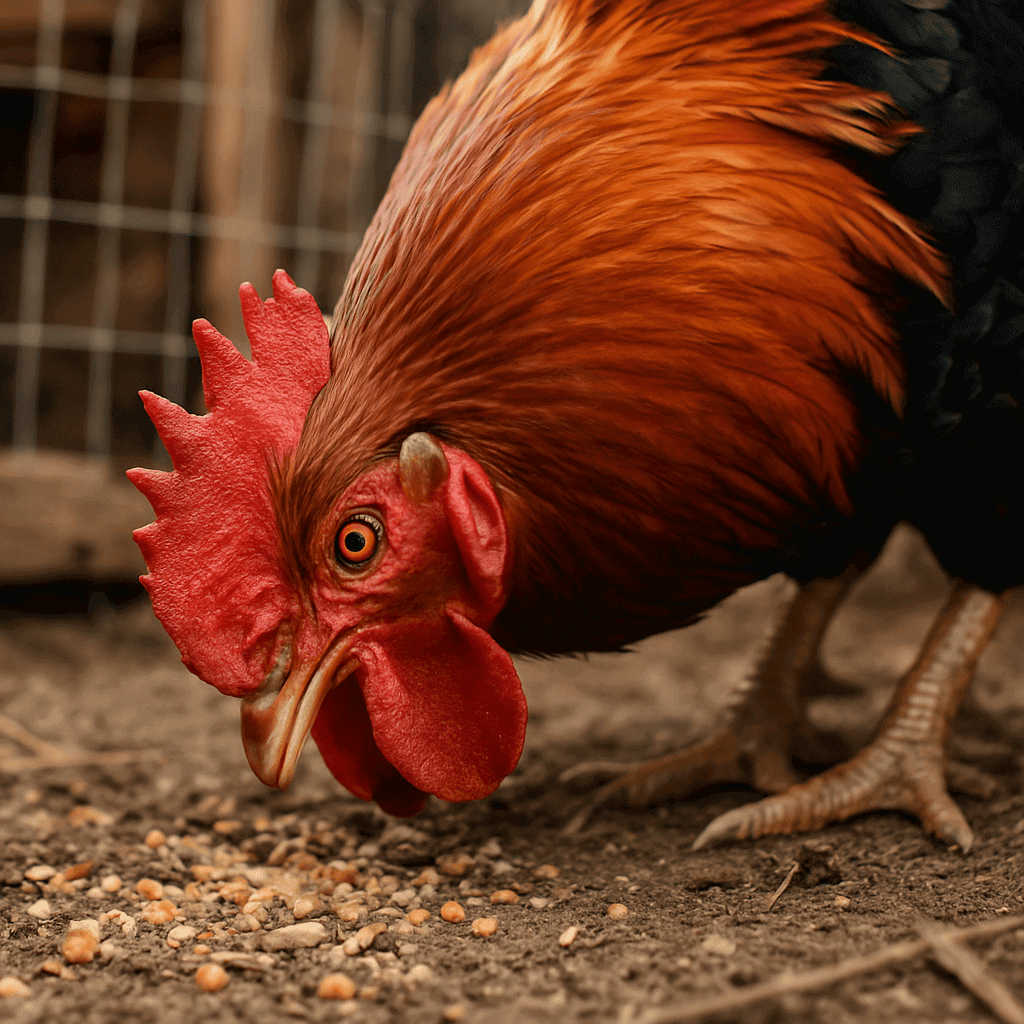
What are Growth Promoters?
Growth promoters are a group of substances or feed additives used in poultry nutrition, designed to improve growth rates, feed efficiency, overall health, and production outputs (meat, eggs). The term “growth promoters” derives from their proven effect on shortening the production cycle and achieving target body weights or higher yields within a shorter period, compared to feeding without these additives. All groups of substances used as “growth promoters” improve gut health, thereby enhancing nutrient digestion and absorption.
In the past, low-dose antibiotics were widely used as growth promoters. However, in recent years there has been a global trend to reduce or eliminate this use due to concerns of antimicrobial resistance and its impact on public health. Therefore, the industry is shifting toward natural or functional alternative solutions.
Types of Growth Promoters
Growth promoters can be classified into several main groups:
- Antibiotic Growth Promoters (AGP)
- For decades, these were the most commonly used.
- At low doses, antibiotics suppress harmful bacterial populations in the gut, reduce subclinical chronic inflammation, and decrease competition for nutrients between bacteria and the bird.
- Withdrawal periods before marketing meat or eggs vary between products.
- There is a risk of development of antimicrobial resistance.
- Due to regulatory and public health restrictions, their use is gradually declining worldwide.
- Probiotics
- The introduction of “beneficial” bacteria into the gut (such as Lactobacillus, Bacillus, Bifidobacterium) creates competition with pathogens for space and nutrients, produces short-chain fatty acids (SCFA) that suppress harmful bacteria, and promotes immune balance.
- Safe for use and widely accepted in “organic” or “antibiotic-free” production systems; improve gastrointestinal health and reduce diarrhea.
- Enhance digestion, strengthen the immune system, and suppress pathogenic bacteria.
- Prebiotics
- Complex fibers (such as FOS – fructooligosaccharides, or MOS – mannan oligosaccharides) are not digested by the bird but serve as “food” for beneficial gut bacteria. In parallel, MOS bind to pathogens v(e.g., E. coli, Salmonella) and prevent them from adhering to the intestinal mucosa.
- They have a beneficial effect on the immune system.
- Synbiotics
- A combination of probiotics and prebiotics, designed to create a synergistic effect.
- Organic Acids
- Acids such as propionic, formic, lactic, and butyric acid penetrate the bacterial cell wall in their non-ionized form, dissociate in their cytoplasm, and lower pH levels, leading to the inhibition or death of harmful bacteria. They reduce intestinal pH, suppress pathogens, and improve digestion.
- They have direct activity against Salmonella and E. coli, and enhance protein digestion; some, such as butyric acid, provide nourishment to intestinal epithelial cells.
- Plant Extracts (Phytogenics / Botanicals)
- Essential oils (such as oregano, cinnamon, garlic, and black pepper) contain active compounds with antioxidant, antimicrobial, and digestion-enhancing properties.
- Yeast and Yeast Products
- Inactive yeast, β-glucans, nucleotides.
- Act as immunomodulators, stimulate immune system cells, and provide antioxidant effects.
Two additional categories do not directly enhance gut health but improve nutrient digestibility.
- Enzymes and Feed Additives
- For example, xylanase, phytase and β-glucanase. Emulsifiers.Emulsifiers
- These improve the breakdown of indigestible components in the feed, releasing available energy and nutrients, and thereby enhance feed efficiency.
- Functional Amino Acids
- For example: supplementation with methionine, threonine, and arginine.
- Beyond their role as protein building blocks, amino acids influence the immune system, tissue regeneration, and antibody production.
How to Choose Between Growth Promoters?
Selection of the appropriate growth promoter depends on several factors:
- Regulation and target market – It is essential to check which substances are approved for use in the country of production and in the export destination markets.
- Sanitary status and contamination pressures – In flocks with high microbial pressure, probiotics and/or organic acids may be required; in cleaner environments, functional additives may be sufficient.
- Feed composition – For example, the use of enzymes should be tailored according to the levels of grains, protein, or phosphate in the feed.
- Economic goals – In some cases, a cost-effective, efficient solution is required; in others, the target market (such as “antibiotic-free”) necessitate the use of advanced natural solutions, even if more expensive.
- Scientific evidence – It is important to select additives supported by controlled studies and consistent results, rather than relying solely on commercial claims.
- Combinations between promoters – Many times, optimal results are achieved using a combination, such as enzymes + probiotics + organic acids, rather than relying on a single component.
Growth promoters in poultry are much more than a nutritional additive – they are a strategic tool for the healthy and efficient management of broiler and layer flocks. While in the past, the industry relied primarily on antibiotics, the current trend is clear: a transition to natural, functional, and sustainable solutions. The use of these promoters not only improves growth rates, feed efficiency, and production outputs, but also provides a layer of health protection that reduces morbidity, lowers the use of antibiotics, and enables producers to meet stringent international standards. The correct selection of growth promoters must meet regulatory requirements, field conditions, and economic goals, and must always be based on scientific knowledge and practical experience – to achieve superior performance and build a stable, healthy future for the industry.
🔹🔹Bar-Magen offers its customers a wide range of advanced natural solutions to optimize growth and improve poultry health, ranging from plant-based additives and high-quality probiotics to combined additives to maintain gut balance, and functional solutions to enhance nutrient absorption and performance.
Accumulated knowledge, together with research collaborations and field experience, enables us to tailor the most suitable growth promoter to the unique needs of each client’s flock as well as their economic goals.
בBar-Magen is a leading company in the fields of animal health and nutrition, with over 40 years of experience serving the agro-industrial sector in Israel. Bar-Magen’s approach is based on a simple principle: combining scientific knowledge, innovative tools, and a deep understanding of on-the-ground needs.
The company collaborates with international manufacturers to bring advanced solutions to the local market for proper management of animal health – from specialized nutritional supplements and plant-based solutions to advanced technological equipment.
